Boosts share 26 tiers at level 26, with up to 20 in each stat. Max fills the available budget.
Explore boost tradeoffs & stat limits
How would you spend the remaining tiers?
Keeping 0 speed tiers (127 speed), these builds use all 26 tiers. Your current level, training and enhancements stay the same.
Health × damage balance
Taller bars mean a higher health × damage score. “Best” maximizes that score at your chosen speed, not your win rate. Abilities, opponents and speed thresholds can favor a different split. Select a bar to try it.
Individual stat ceilings
At level 26. Each ceiling puts as many available points as possible into that one stat; these are separate builds, not a combined maximum.
Stat
Current
Individual ceiling
Try a focused build
Health
3,300
4,950
Damage
1,600
2,400
Speed
127
167
Armor
0%
0%
Crit chance
5%
5%
Crit damage
1.25×
1.25×
Before conditional battle effects. The simulated battles below follow this level (at 26 or 35, whichever is nearer), with no boosts or enhancements.
Evolution & creation costs
From creation to level 26146,750 DNA588,190 coins
Creation requires 50 DNA separately. Enhancement, milestone and training costs are additional.
All evolution costs
Level reached
DNA
Coins
Base health
Base damage
2
100
5
1,023
496
3
150
10
1,074
520
4
200
25
1,127
546
5
250
50
1,184
574
6
300
100
1,243
603
7
350
200
1,305
633
8
400
400
1,371
664
9
500
600
1,439
698
10
750
800
1,511
732
11
1,000
1,000
1,587
769
12
1,250
2,000
1,666
808
13
1,500
4,000
1,749
848
14
2,000
6,000
1,837
890
15
2,500
8,000
1,929
935
16
3,000
10,000
2,025
982
17
3,500
15,000
2,127
1,031
18
4,000
20,000
2,233
1,082
19
5,000
30,000
2,345
1,137
20
7,500
40,000
2,462
1,193
21
10,000
50,000
2,585
1,253
22
12,500
60,000
2,714
1,316
23
15,000
70,000
2,850
1,382
24
20,000
80,000
2,993
1,451
25
25,000
90,000
3,142
1,523
26
30,000
100,000
3,300
1,600
27
35,000
120,000
3,464
1,679
28
40,000
150,000
3,638
1,764
29
50,000
200,000
3,820
1,852
30
75,000
250,000
4,011
1,944
31
100,000
250,000
4,191
2,032
32
100,000
250,000
4,356
2,112
33
100,000
250,000
4,521
2,192
34
100,000
250,000
4,702
2,280
35
100,000
250,000
4,950
2,400
26 left
HP 3,300DMG 1,600SPD 127
Simulated battles · Level 26 vs 26 · No boosts
How to beat Diplocaulus: counters that win
Battle level
241 of 494 beat it243 it beats
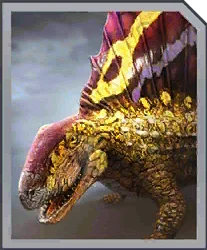
To beat Diplocaulus, bring Euoplocephalus, the best Common counter. Use Superior Vulnerability, then Precise Rampage to win with about 45% HP left. Overall best: Indolycan (Apex). Diplocaulus: Indolycan, Indoraptor Mattel and Nominrex beat it at level 26, and it beats 243 of 494 creatures.
How to beat Diplocaulus with Euoplocephalus, move by move
If Diplocaulus opens with Instant Cunning Strike: Superior Vulnerability, then Precise Rampage. Wins with 51% HP left.
If Diplocaulus opens with Nullifying Impact: Superior Vulnerability, then Precise Rampage. Wins with 45% HP left.
Each fight is played out move by move. Diplocaulus sees your move every turn and answers with its best reply, so a win here holds against perfect play.
The best 5 Common counters. Every counter is in the full list below.
Both are simulated at level 26 with no boosts, enhancements or Omega training. If your Euoplocephalus is higher level or boosted, this win only gets safer; if Diplocaulus is, it can turn the result, so check both builds first.
Both creatures are level 26 with no boosts, enhancements or Omega training. Every unlocked move is available, including low-health variants, with delays, cooldowns, priority and speed order. The simulation applies armor, shields, dodge, cloak, critical hits, critical chance buffs and reductions, damage buffs and reductions, vulnerability, rend, healing, devour, damage over time, stun, daze, resistances and their reductions, cleansing, removals, immunity and counter-attacks. Daze stops the dazed creature's counter-attacks.
Stun, dodge and daze chances are counted as weighted outcomes, not sampled, and speed ties are split evenly. Critical hits count at their average: every hit adds its critical chance times the extra critical damage, so the damage shown in a battle includes that average. Each turn shown follows the most likely roll. Each battle is a fight to the knockout between these two creatures, so moves that swap the user out (Retreat, Rampage and Run and the like) are not used while another move is ready, and a win that can come sooner is taken sooner. Swapping, swap-in and escape abilities, taunt and flock damage limits are not modeled.
Every non-Omega creature is first screened against Diplocaulus in a quick estimate: up to six turns with a smaller search. The strongest candidates are then played out in full, up to eight turns, and any creature in the full list plays its full battle when you open it. A full battle can disagree with its quick estimate; the full battle is the better guide.
Battles are simulated at levels 26 and 35. When the build above is set to another level, the nearest one is shown and labelled.
These are simulated results, not guaranteed wins. A critical hit that lands, or one that does not, can change a close fight.



 Bleed (DoT)
 Rend
 Speed reduction
 Stun
 Swap prevention
 Taunt
 Vulnerability
 Armor reduction
 Affliction
 Healing reduction
 Daze

 Cleanse Damage over time.
 Reduce Damage 50% for 1 turn, 2 attacks.
 Reduce Crit Chance 100% for 1 turn, 2 attacks.
 Remove Crit increase.
 Attack .
 Dodge 75% chance, 67% of damage, for 1 turn, 2 attacks.


 Lockdown 2 turns.